
Look, I know you’re tired of reading vague articles about PCN licensing that tell you to “follow the process” without actually explaining what that process looks like in real life.
You’ve probably already visited the PCN office or their website. Maybe you talked to someone who got their license five years ago and their advice doesn’t match what you’re hearing now. Or worse, you’ve been told three different things by three different people, and you’re not sure who to believe.
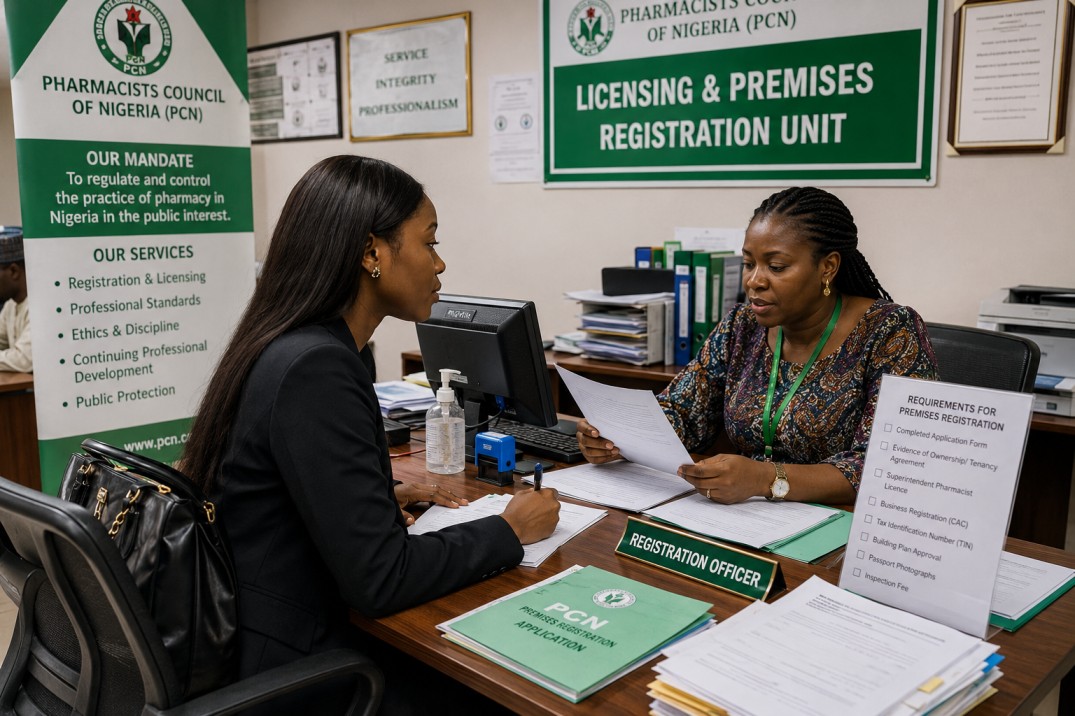
Here’s the truth: getting your pharmacy license from the Pharmacists Council of Nigeria isn’t mysterious, but it is particular. They want specific things in a specific order, and if you show up missing even one document or if your premises aren’t set up right, you’re starting over.
So let me walk you through this the way I’d explain it if we were sitting down over drinks and you were asking me how to actually get this done.
Why PCN Licensing Feels Like a Maze (And Why It Matters)
The PCN registration process exists to make sure that pharmacies in Nigeria meet basic safety and professional standards. That’s the official line, and honestly, it’s true.
But what they don’t tell you is that the requirements have gotten stricter over the years. What worked in 2015 doesn’t work now. The inspectors are more thorough. The documentation requirements have expanded. And there’s no shortcuts anymore.
This matters because your entire business timeline depends on getting this license. You can’t order stock from legitimate suppliers without it. You can’t legally operate. Everything waits on PCN approval.
So getting it right the first time isn’t just about following rules. It’s about not wasting four to six months of your life going back and forth.
What Type of License Are You Actually Applying For?
Before we dive into requirements, let’s clarify something that confuses people constantly.
PCN issues different categories of pharmacy licenses:
- Retail pharmacy – What most people are opening. Sells drugs to the public, OTC and prescription.
- Community pharmacy – Similar to retail but may have additional clinical services.
- Wholesale pharmacy – For businesses distributing to other pharmacies and healthcare facilities.
- Hospital pharmacy – Within healthcare institutions.
- Importation license – For bringing pharmaceutical products into Nigeria.
This guide focuses on retail and community pharmacy licenses since that’s what most first-time owners need. The process is similar for others, but the requirements and fees differ. You can find more details about all license categories on the Pharmacists Council of Nigeria official website.
Image suggestion: Infographic showing the different types of PCN pharmacy licenses with brief descriptions and typical costs for each.
Alt text: “Types of pharmacy licenses available from PCN in Nigeria”
The Real PCN Requirements (No Sugarcoating)
Let me break down what you actually need. And I mean everything, because showing up without one of these will send you home.
Your Personal Qualifications
You need to be a fully registered pharmacist with PCN. That means:
- Bachelor of Pharmacy degree from a recognized institution
- Completed one year mandatory internship
- Passed your pharmacist qualifying exams
- Current annual practicing license from PCN
If you’re not a pharmacist yourself, you must employ a superintendent pharmacist who meets all these requirements. And here’s the part people forget: this person needs to be genuinely working at your pharmacy, not just a name on paper. PCN inspectors ask questions and they can tell.
Your Business Registration
You need legal business documents from the Corporate Affairs Commission:
- Registered business name or incorporated company
- Certificate of incorporation (if you went the limited company route)
- Memorandum and Articles of Association
- Tax Identification Number from FIRS
Don’t skip the tax clearance. PCN checks.
Your Premises Documentation
This is where things get detailed:
- Valid tenancy agreement (minimum two years remaining) or proof of ownership
- Building plan approval from your local government authority
- Local government business premises permit
- Fire safety certificate
- Environmental health certificate from your State Ministry of Health
Some states require additional documentation. Lagos is particularly strict about this. Abuja too. Check with your state’s PCN office for any extra requirements.
Internal link suggestion: “How to Start a Pharmacy in Nigeria: A Step-by-Step Guide for First-Time Owners”
Your Physical Space Requirements
Your premises must meet specific standards, and this is where many applications fail:
- Minimum 25 square meters of floor space for retail pharmacy
- Adequate lighting (both natural and artificial)
- Proper ventilation
- Separate storage area with appropriate shelving
- Dispensing area with counter
- Clean toilet facilities
- Reliable water supply
- Security features (burglary proof, secure doors)
- Minimum distance from nearest pharmacy (usually 200 meters, varies by state)
The distance rule trips people up constantly. You can’t just find a nice shop and assume it’ll work. You need to physically check how far the nearest registered pharmacy is. PCN won’t approve you if you’re too close to an existing one.
Image suggestion: Photo checklist showing a well-organized pharmacy storage room with proper shelving, temperature control, and clear labeling that meets PCN standards.
Alt text: “PCN-compliant pharmacy storage and dispensing area layout”
The Actual Step-by-Step PCN Registration Process
Alright, here’s how this unfolds in practice.
Step 1: Get Your Premises Ready
Before you submit anything to PCN, make sure your space is ready for inspection. I’m serious about this. Don’t pay your application fees until your premises meet all the requirements because PCN doesn’t refund if you fail inspection.
Walk through your space with the checklist above. Better yet, hire a pharmacy consultant to do a pre-inspection. They’ll spot problems you might miss.
Step 2: Submit Your Application
You’ll submit to your state’s PCN zonal office (not the headquarters in Abuja unless you’re in FCT). You can find the contact details for your zonal office on the PCN website. Your application package includes:
- Completed PCN premises registration form
- All the documents I listed earlier
- Passport photographs of the superintendent pharmacist
- Application fee payment receipt
Application fees currently range from ₦100,000 to ₦250,000 depending on pharmacy category and location. Yes, it’s a lot. No, it’s not negotiable. Check the PCN official website for the most current fee structure as these amounts can change.
Step 3: Wait for Inspection Scheduling
After submission, PCN will review your documents. If everything looks good, they’ll schedule a premises inspection. This usually happens within four to six weeks, but I’ve seen it take longer during busy periods or if there’s backlogs.
They’ll contact your superintendent pharmacist to arrange a date. Make sure someone is available and that the premises is fully set up for the visit.
Step 4: The Inspection Visit
This is the moment of truth.
A team of PCN inspectors will visit your premises. They’re checking everything: measurements, lighting, storage conditions, security, documentation, cleanliness. They’ll ask your superintendent pharmacist questions about operations, drug storage, record keeping.
Here’s what most people don’t realize: the inspectors aren’t trying to fail you. They want compliant pharmacies to succeed. But they have standards to uphold, and they take their job seriously.
Be professional. Have your documents organized. Make sure your premises is clean and everything is properly labeled. Answer questions honestly.
Internal link suggestion: “Pharmacy Consultancy Services: What to Expect and What It Costs”
Step 5: Wait for Approval or Address Deficiencies
If your premises passes inspection, congratulations. PCN will issue your premises license within two to four weeks.
If there are issues, they’ll give you a list of deficiencies to correct. You’ll need to fix these and request a re-inspection. This costs additional fees and adds months to your timeline.
Why Applications Get Rejected (And How to Avoid It)
Let me share the most common rejection reasons I’ve seen:
Inadequate space. People try to squeeze a pharmacy into 20 square meters. It won’t pass. Measure properly.
Poor storage conditions. Medications can’t be stored in damp areas or where temperatures fluctuate wildly. If your space doesn’t have proper ventilation or climate consideration, that’s a problem. The National Agency for Food and Drug Administration and Control (NAFDAC) also has guidelines on proper pharmaceutical storage that align with PCN requirements.
Too close to another pharmacy. Do your homework before signing a lease. Walk the area and check distances.
Incomplete documentation. Missing even one certificate or signature will delay everything. Triple check your paperwork.
Superintendent pharmacist not present during inspection. If the pharmacist isn’t there or clearly doesn’t know the premises, inspectors will notice.
Security concerns. If your premises looks easy to break into or you don’t have basic security measures, PCN won’t approve it.
The Real Timeline (Not the Optimistic One)
Let’s be honest about how long this takes:
- Document preparation: 2 to 4 weeks
- Application review: 3 to 6 weeks
- Inspection scheduling: 1 to 2 weeks
- Inspection to approval: 2 to 4 weeks
Best case scenario: Three months from application to license.
Realistic scenario: Four to six months.
If there are complications: Six months to a year.
I’m not saying this to discourage you. I’m saying it so you can plan properly. Don’t promise your landlord you’ll open in two months. Don’t quit your job expecting to be operational immediately. Budget for the actual timeline, not the hopeful one.
Insider Tips That Actually Help
Here’s what experienced pharmacy owners wish they’d known:
Start with a consultant. Yes, it costs money (usually ₦50,000 to ₦200,000 depending on services). But they know exactly what PCN wants and can save you months of back-and-forth.
Build relationships. Be respectful and professional with PCN staff. You’ll likely need to visit multiple times. Being known as cooperative and serious makes things smoother.
Document everything. Take photos of your premises setup. Keep copies of all submissions. If questions arise later, you’ll have evidence.
Don’t cut corners on premises. The cheapest shop often becomes the most expensive when it fails inspection repeatedly.
Time your application strategically. End of year tends to be slower because of holidays. Early in the year, PCN offices are often clearing backlogs.
Image suggestion: Photo of organized folders or document checklist showing all required PCN registration documents neatly prepared.
Alt text: “Complete PCN licensing documentation checklist for Nigerian pharmacy”
What Happens After You Get Your License
Getting your PCN premises license isn’t the finish line, it’s the starting line.
You’ll need to renew annually. You’ll need to maintain standards. PCN can do random inspections anytime. If they find you’ve let things slide, your license can be suspended or revoked.
Also remember you still need other operational licenses: your State Ministry of Health facility license, local government permits, and various other registrations depending on your location. Your state’s Ministry of Health website should have information on additional health facility licensing requirements.
Internal link suggestion: “Complete Guide to PCN Licensing Requirements for Nigerian Pharmacies”
You Can Actually Do This
I know this feels like a lot. And honestly? It is a lot.
But here’s what I want you to understand: thousands of pharmacies go through this PCN registration process successfully every year. The system works if you follow it properly.
You don’t need special connections. You don’t need to “settle” anybody (and please don’t try, it just complicates things). You need proper documentation, compliant premises, and patience.
So where do you start right now?
If your premises isn’t secured yet, don’t rush into signing any lease. First, understand the PCN requirements fully (download the current guidelines from PCN’s official website), then find a location that meets them.
If you already have premises, get a pharmacy consultant to do a pre-inspection audit. Let them tell you what needs fixing before PCN shows up.
If you’re ready to apply, organize your documents systematically. Create a checklist and tick off each requirement as you complete it.
And if you’re feeling overwhelmed? That’s normal. This is complex. But it’s not impossible.
The pharmacy license is your ticket to building something real. Take the time to do it right, and you’ll thank yourself later.